01
Основний геймплейCore Gameplay
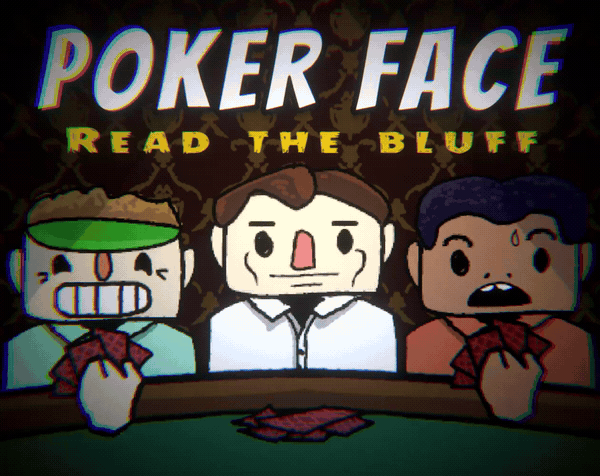
Ідея виросла з теми «Сигнал». Хотілося знайти для неї унікальну інтерпретацію, і сигнали в покері, якими гравці видають блеф або шахрайство, підійшли для цього якнайкраще. Тому основна ідея полягала в тому, щоб зробити покер, де гравець вирішує, підвищувати ставку чи скидати карти, читаючи емоції суперників.The idea came from the theme "Signal". The goal was to find a unique interpretation of it, and poker tells, the signals players give away when bluffing or cheating, fit it best. So the main idea was to create a poker game where the player decides whether to raise or fold by reading the opponents' emotions.
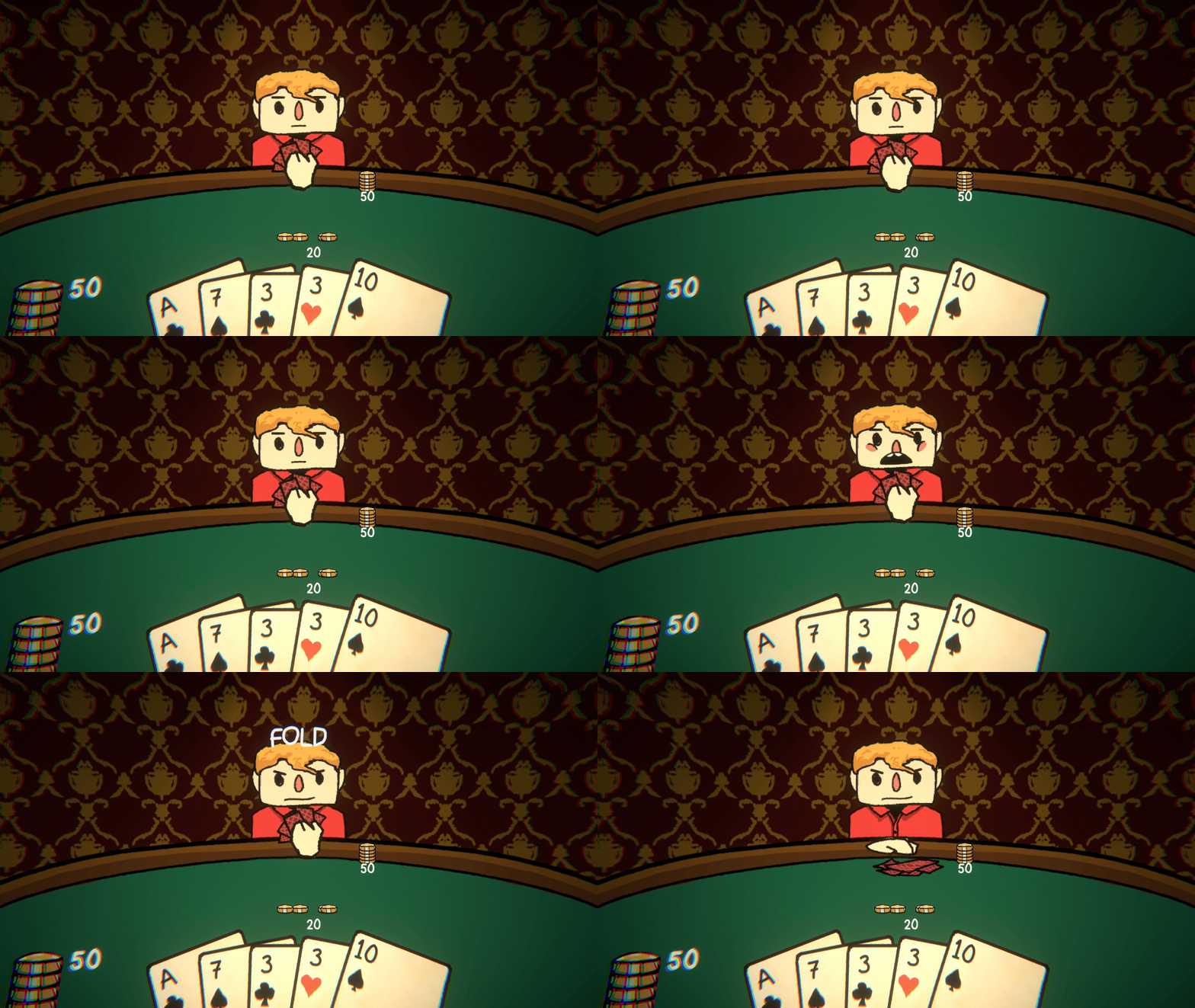
Емоція суперника залежала від сили його руки. Для цього кожній комбінації, а також кожній карті окремо, призначили власну ціну в очках, і сума цих очок визначала реакцію персонажа. Якщо суперник не блефував, то за середньої суми він залишався нейтральним, слабка рука викликала страх або злість, а сильна робила його задоволеним.An opponent's emotion depended on the strength of their hand. To achieve this, every combination, as well as every individual card, was given its own point value, and the total score determined the character's reaction. If the opponent wasn't bluffing, an average total kept them neutral, a weak hand made them afraid or angry, and a strong one made them pleased.
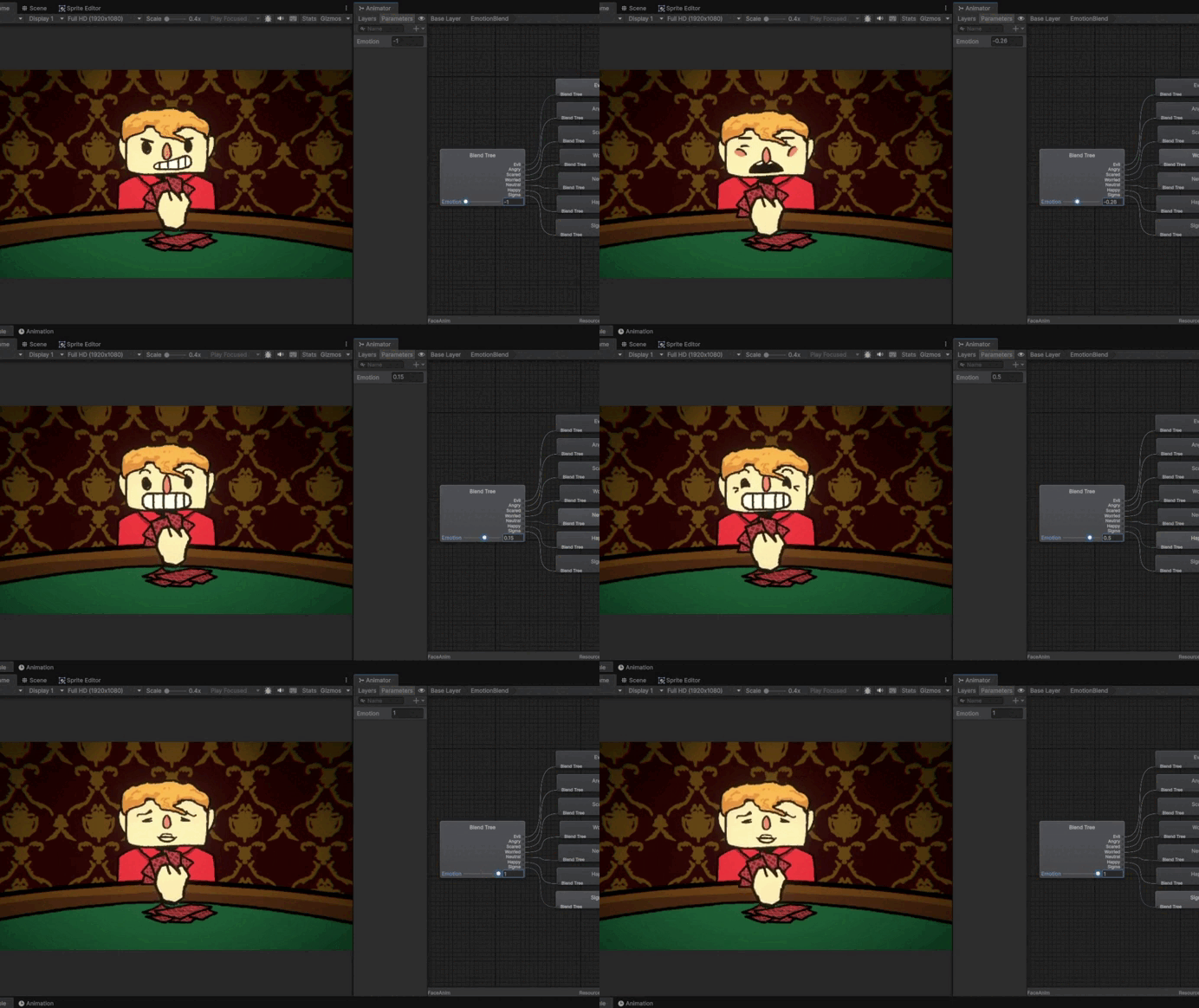
Загалом у грі 7 унікальних емоцій. У кожного персонажа їх було лише 3, але кожен новий суперник отримував щонайменше одну нову емоцію, якої не було в попередніх, тож читати його доводилось заново. Переходи між емоціями зробили через Blend Tree, щоб вони виглядали красивіше й веселіше.In total, the game has 7 unique emotions. Each character had only 3, but every new opponent got at least one new emotion not seen before, so the player had to learn to read them again. Transitions between emotions were made with a Blend Tree to make them look nicer and more fun.
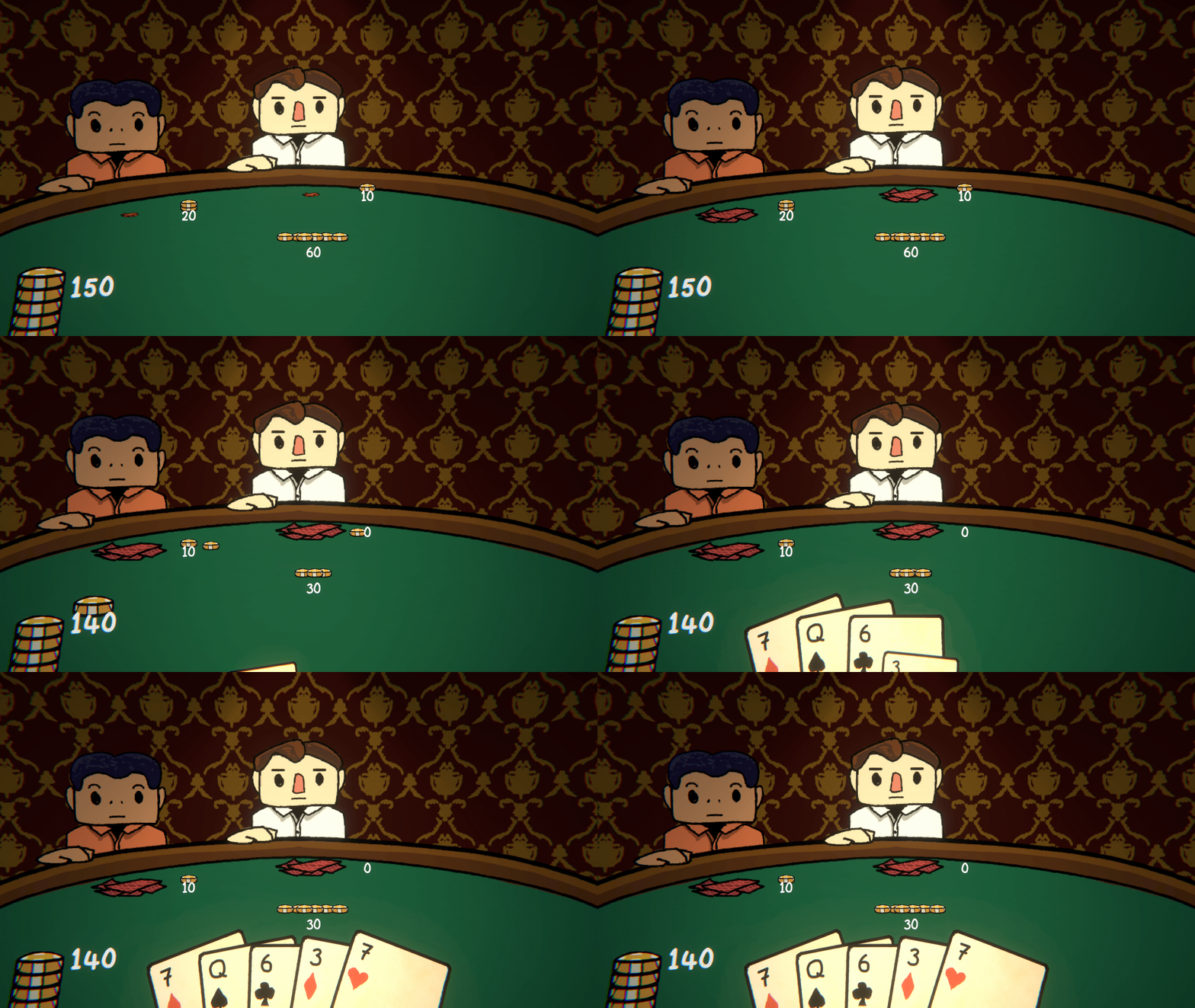
Окрім емоцій, кожен суперник отримав власний стиль гри, агресивний або стабільний, і свою манеру блефувати, щоб читання не зводилось до однієї схеми. Гра складається з 4 столів. Спершу гравець зустрічає суперника, який зовсім не вміє блефувати, і вчиться пов'язувати емоцію з рукою. Потім з'являється той, хто блефує постійно, і цей зв'язок уже не працює. Далі за столом одразу двоє суперників зі своїми характерами, а наприкінці на гравця чекає бос мафії. Стіл вважається пройденим, якщо в суперника закінчились фішки або минуло 7 раундів.Besides emotions, every opponent was given their own play style, aggressive or steady, and their own way of bluffing, so that reading wouldn't come down to a single pattern. The game consists of 4 tables. First, the player meets an opponent who can't bluff at all and learns to link emotion to hand. Then comes one who bluffs constantly, and that link no longer works. Next, two opponents with their own personalities sit at the table at once, and at the end the player faces a mafia boss. A table counts as won if the opponent runs out of chips or 7 rounds have passed.
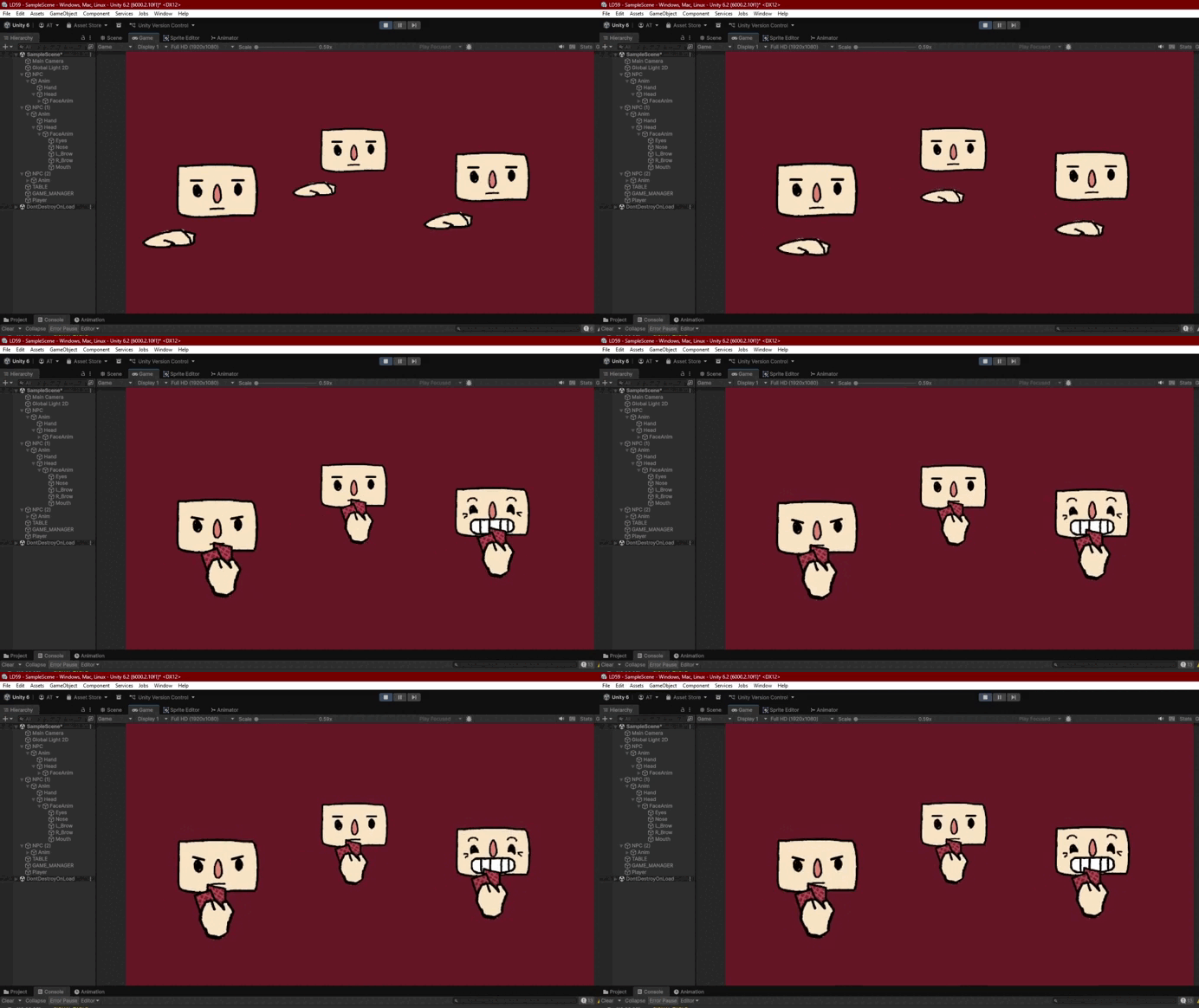
Найбільшим технічним ризиком були кілька суперників за одним столом, адже кожен має власні емоції, ставки та стан у роздачі. Нижче гіфка з першого дня джему, коли в грі ще майже нічого не було і за столом сиділи лише однакові болванки-голови без тіл.The biggest technical risk was having several opponents at one table, since each has their own emotions, bets, and state within the hand. Below is a gif from the very first day of the jam, when there was barely anything in the game and only identical bodiless placeholder heads sat at the table.
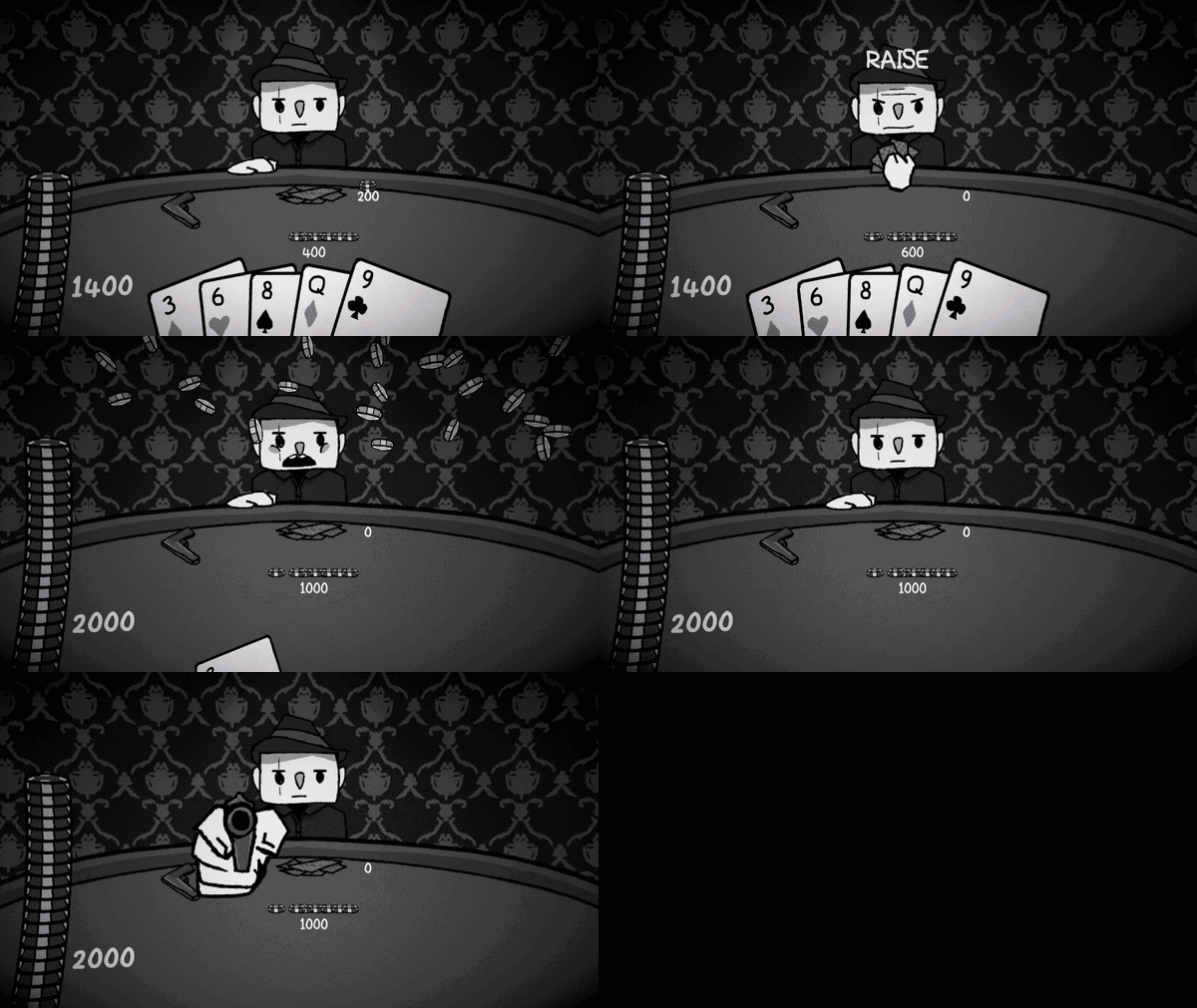
Фінальним суперником став бос мафії, найагресивніший гравець у грі. Кінцівку задумали як жарт над самим жанром. Обіграти мафіозі в карти можна, а от вийти з-за столу живим ні, тож щойно в боса закінчуються фішки або минає останній, 7-й раунд, він просто вбиває гравця.The final opponent is a mafia boss, the most aggressive player in the game. The ending was conceived as a joke on the genre itself. You can beat a mobster at cards, but you can't leave the table alive, so as soon as the boss runs out of chips or the final, 7th round ends, he simply kills the player.